
European Affairs

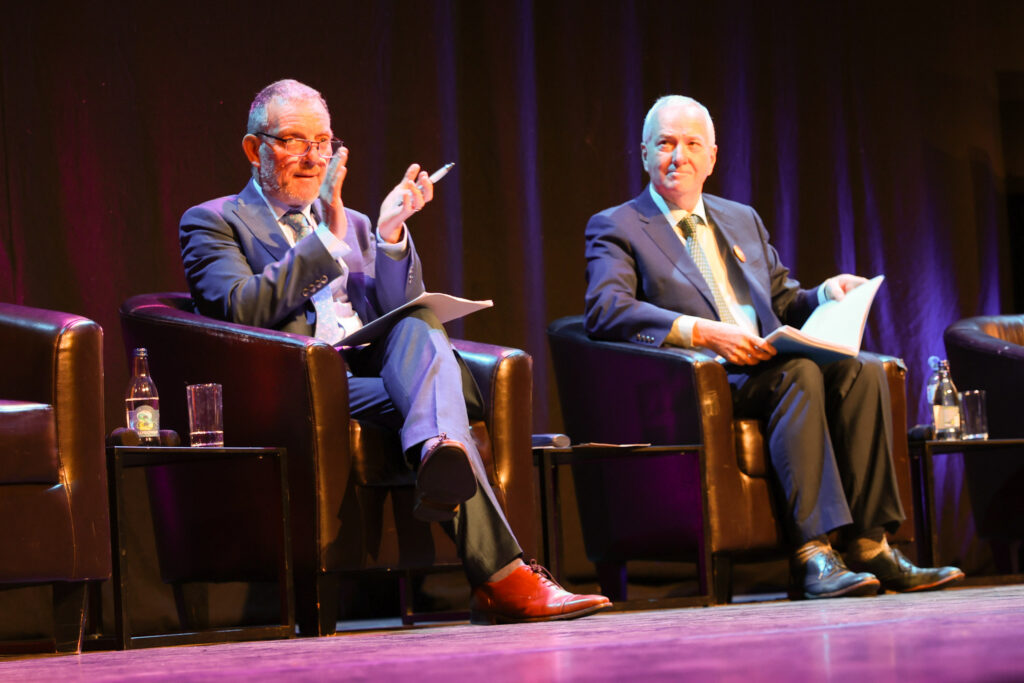
Ireland takes up the Presidency of the European Council in June 2026 and this provides a unique opportunity for civil society in Ireland.

Presidency of the European Council

Ireland takes up the Presidency of the European Council in June 2026 and this provides a unique opportunity for civil society in Ireland. Last year we held a townhall event to hear from our members about their priorities for the Presidency, and we also made a detailed submission. Many of our members will engage with Government during the Presidency, highlighting issues such as shrinking civil
space, the need for a social Europe, renewal of the just transition agenda and ending rapid deregulation.

In 2026 we will continue to advocate for the needs of civil society in the EU context, to highlight our members’ work around the presidency and to increase access to opportunities.

Improving access to EU funding

At The Wheel, we facilitate a number of European programmes for the community and voluntary sector, including Access Europe, as well as engaging on the social economy at European level. It is clear through our work in this area that much more work is needed to improve access to EU funding for community and voluntary organisation in Ireland.

Many EU funding programmes require match funding, with the EU typically covering 60—80% of costs. When co-financing reaches 80% or more, sector organisations can often meet the match through in-kind contributions like staff and volunteer time. However, for programmes with lower co-financing rates, such as LIFE and INTERREG, participation becomes much harder.  Nonprofits or community organisations, discouraged from building financial reserves, are at a disadvantage compared to public bodies and often excluded from these opportunities. This limits their ability to scale innovation through successive EU
grants. It also weakens multi-sector consortia, which many EU programmes favour, by making it harder to include community groups, thus reducing project quality and competitiveness.

We believe that a state-backed EU Match-Funding Scheme for the sector would unlock significant EU investment for a modest Government outlay. Countries like the Netherlands, Belgium, and Germany already offer such schemes. The Wheel and Access Europe submitted a detailed proposal, backed by MEPs and key stakeholders, in 2022.

Irish managed projects

Several EU funding programmes are decentralised from Brussels and are managed by authorities here in Ireland, including the European Social Fund Plus (ESF+). Much of this funding goes to state and semi-state bodies, e.g. ETBs,Youthreach, Springboard+, with limited ESF+ funding trickling down to community groups via intermediaries like Pobal. Yet, civil society plays a central role in addressing ESF+ priorities: poverty, inequality, and youth unemployment.

With EU regulations calling for “an appropriate amount” of ESF+ to support civil society capacity building, Ireland falls short when compared to other EU countries. Dedicated, ring-fenced funding for sector organisations—distributed through competitive, transparent processes—is needed to ensure fair access and better alignment with ESF+ objectives.
Additionally, many sector groups, especially volunteer-led or migrant/refugee organisations, lack the capacity to apply for and manage EU funding despite strong local knowledge, project ideas, and impact potential. To address these issues, we recommend

  • Utilising Presidency of the European Council to advocate for the protection of civil society, the development of a more social Europe and re-establishing the green agenda in the face of rapid deregulation
  • allocating an initial €5 million to an EU Match-Funding Scheme
  • ring-fencing a portion of decentralised EU funding for the community and voluntary sector,
  • incentivising local authorities to support local groups applying for EU funding.


Join The Wheel today and avail of membership deals

Find out how you can cut your costs, and maybe even avail of FREE membership, by joining The Wheel today.